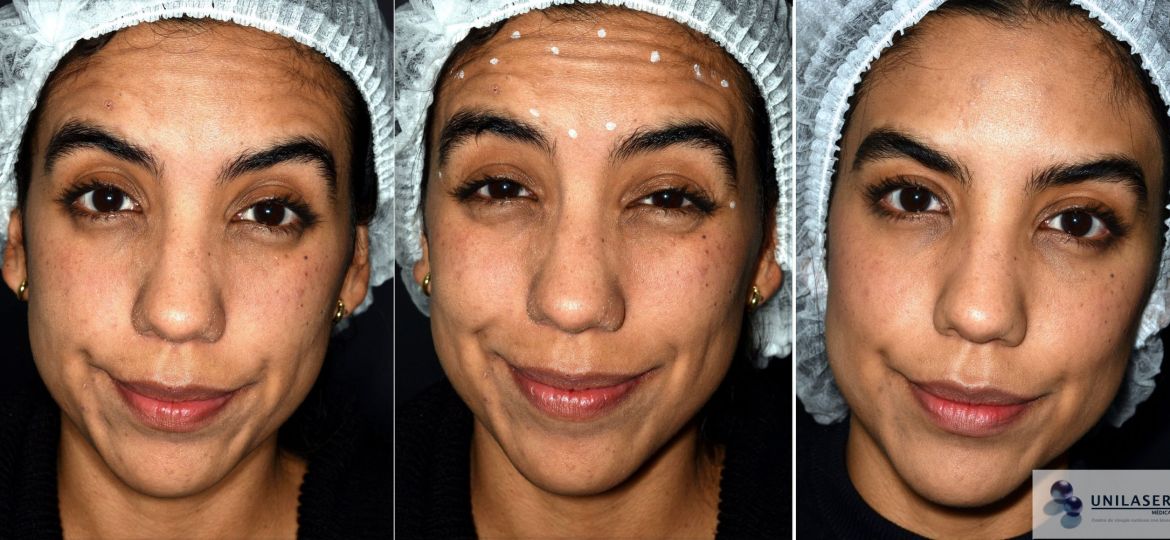
Botox
- Muscle contraction requires the transmission of signals from the nerve to the muscle through the adhesion of nerve vesicles loaded with neurotransmitters to the muscle membrane.
- The anchoring of these vesicles to the muscle is made possible by a group of proteins known as the SNARE complex, which acts like a “zipper,” fusing the vesicle with the muscle membrane and allowing the neurotransmitter to enter the muscle.
- Botulinum toxin prevents the anchoring between nerve and muscle by cleaving one of the proteins of the SNARE complex, specifically SNAP-25. When injected, the toxin is protected by a protein shell that is cleaved outside the nerve. Upon contact with the nerve terminal, one of its chains binds to a specific receptor on the nerve membrane, allowing the toxin to be internalized. A second, smaller chain then triggers the destructive effect inside the cell by cleaving SNAP-25.
- Once the toxin has been applied, SNAP-25 must be resynthesized in the neuronal nucleus and transported back to the axon, a process that takes several months.
- Botox binds to cells during the first 4 hours after application, and depending on the dose, its full effect may appear within a few days. In cases where the blockade is incomplete, the maximum effect is typically observed at two weeks.
- At injection sites where more than 5 units are applied, complete recovery may extend beyond four months.
- The goal of Botox application is to selectively paralyze the most hypertonic muscles while simultaneously generating a balancing or compensatory effect from the untreated muscles.
- In the upper third of the face, the eyebrows represent a key landmark, and their position is influenced by the injection technique.
- Botox is also used to treat gummy smile, soften upper lip wrinkles, elevate the oral commissures, reduce chin wrinkles, decrease expressions of disdain during speech, and to reduce bruxism.

Gummy smile correction with Botulinum toxin 
Botulinum toxin injection points for bruxism