
Laser Treatment of Sebaceous Hyperplasia
What is sebaceous hyperplasia?
People might describe sebaceous hyperplasia as small lumps or bumps on the skin, which are usually yellowish or skin-colored.
- General increase in pigment
- Lentigines and guttate hypomelanosis
- Poikiloderma
- Ephelides
In general, skin aging coexists with the accumulation of sun damage. The laser is indicated to treat lesions that are complex for older therapies, such as smaller circumscribed or larger ones. Lentigines, pigmented keratoses, and guttate hypomelanosis accumulate throughout life.
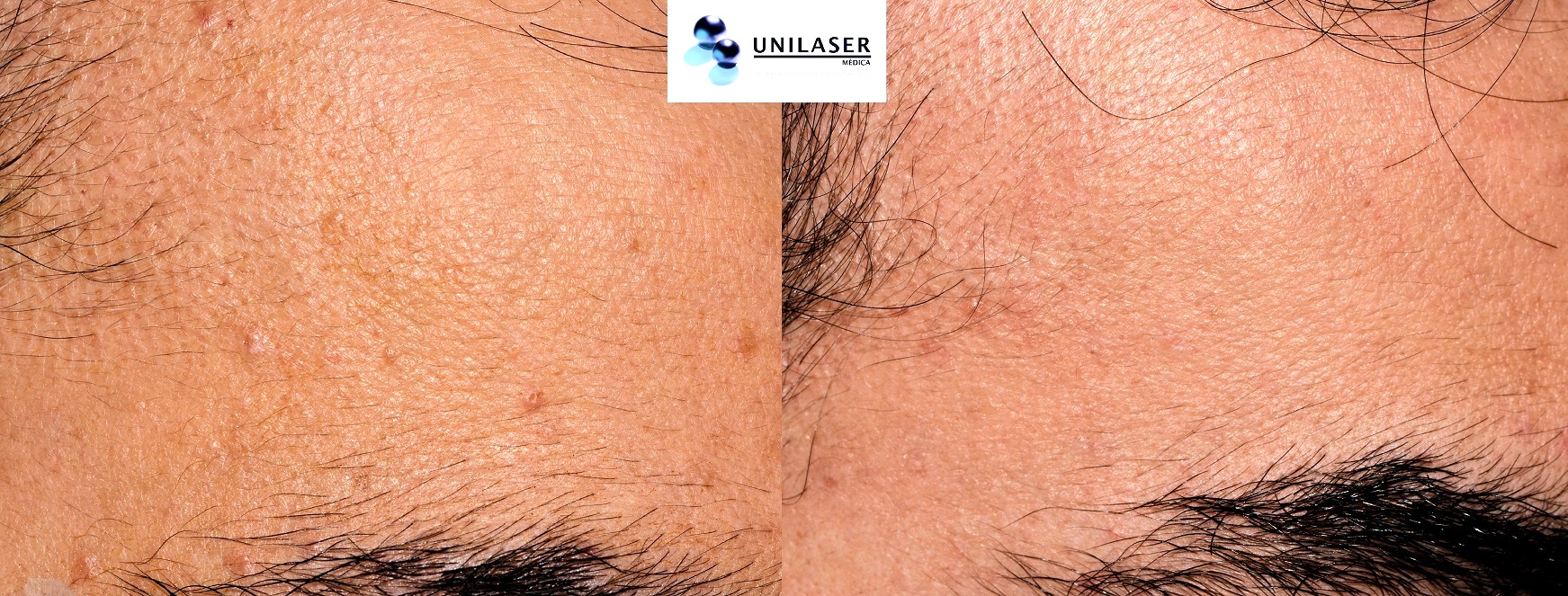
hiperplasias sebaceas
They often appear on the face, especially on the forehead and cheeks, and are formed due to the enlargement of sebaceous glands. These lesions are not dangerous, but can be considered an aesthetic problem.
Consultations for sebaceous hyperplasia are more common after age forty. However, some people may present numerous lesions from the age of twenty.
How do they differ from acne?
Sebaceous hyperplasia is distinguished from acne because, when squeezed, instead of releasing the typical whitehead of a comedone, they expel a milky material, which is sebum, which normally moisturizes the skin.
What does laser treatment for sebaceous hyperplasia consist of?
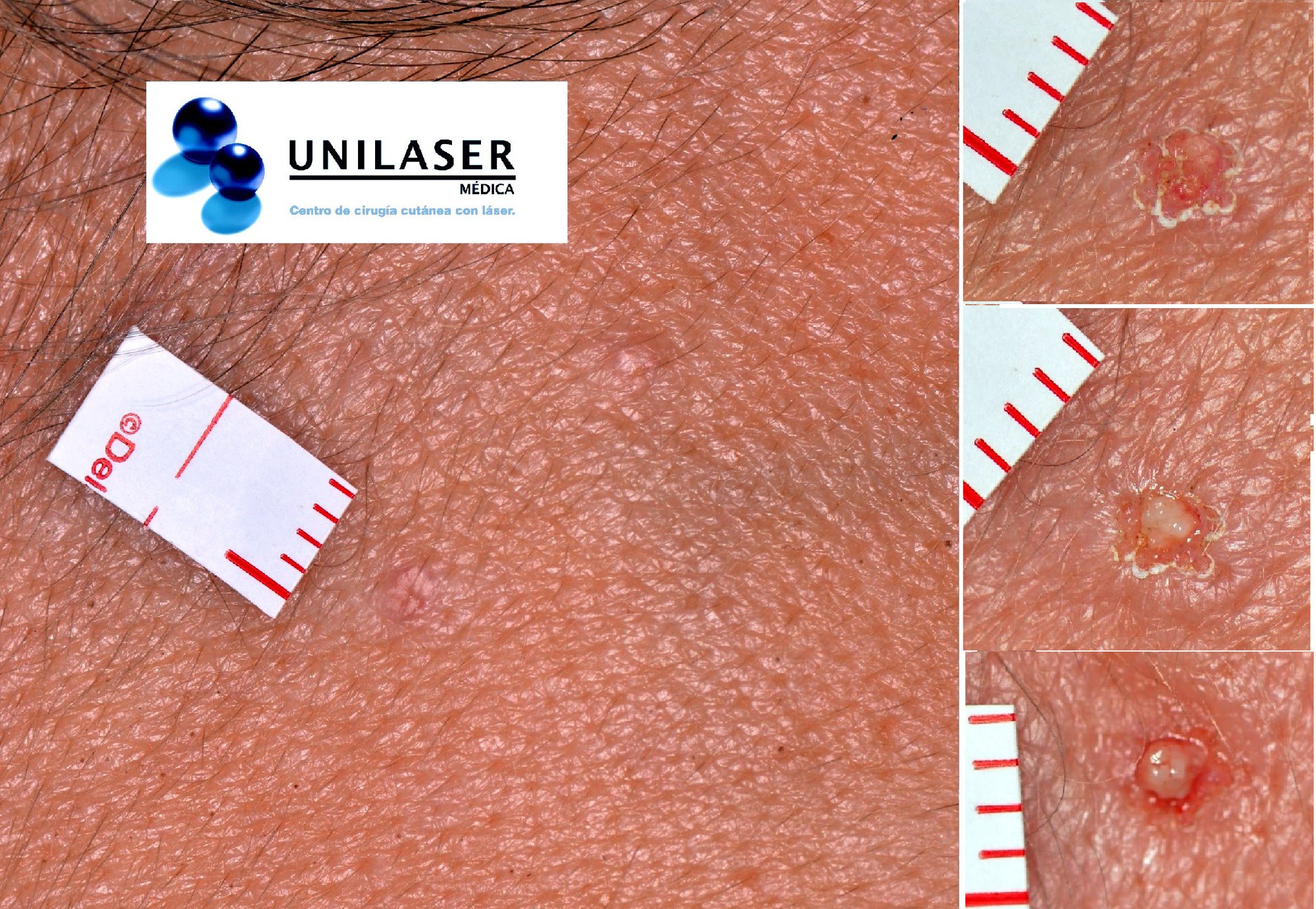
The laser treatment for sebaceous hyperplasia begins by treating the center of the lesion to drain it through a small hole, suitable for lesions smaller than two millimeters, where the CO2 laser is used.
In larger lesions, from 3 to 6.7 millimeters, greater complexity is presented.
Here, radiofrequency complements the laser, focusing on heating the gland to facilitate its extraction, keeping the surrounding tissue intact, which allows for effectively treating deeper or lateral areas and minimizing the possibility of recurrence or scarring.
What is the recovery like for the combined laser and radiofrequency procedure?
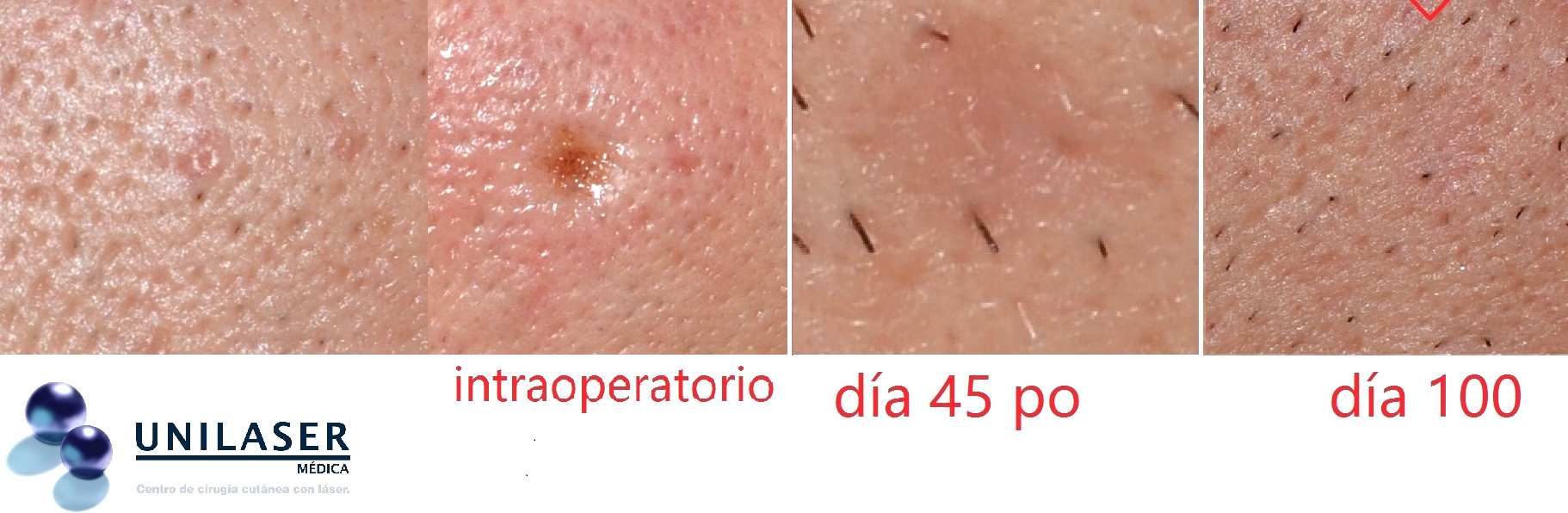
The recovery from the combined laser and radiofrequency procedure for sebaceous hyperplasia has a period similar to that of laser acne treatments, with the scab falling off in less than a week.
However, for more complex lesions, the skin may be slightly sunken and require months to level out completely.
técnica de remoción de hiperplasias sebáceas
Tratamiento de hiperplasias sebáceas
proceso de extirpación de hiperplasia sebácea
Postoperative evolution of the treatment of sebaceous hyperplasia. On day 45 he presented erythema and slight sinking. By the third month the healing is complete.
Comparative image of two profiles of an adult’s face, viewed from the front. In the photograph on the left, more spots, irregular texture, and visible redness are observed in the area of the nose, cheeks, and chin. In the photograph on the right, taken after the treatment, the skin appears more uniform, with less contrast of the spots and a more homogeneous appearance.
