Laser Rejuvenation
Fractional laser systems

Laser facial rejuvenation
- Spots, tumors, and dilated veins.
- Skin replacement
- Improve skin texture
My skin is aging…
- I have freckle-like spots and dilated veins.
- The skin surface is rough.
- I have skin tumors.
- I have red, scaly areas that do not fall off.
- The skin has a rhomboidal appearance.
- I have many wrinkles.
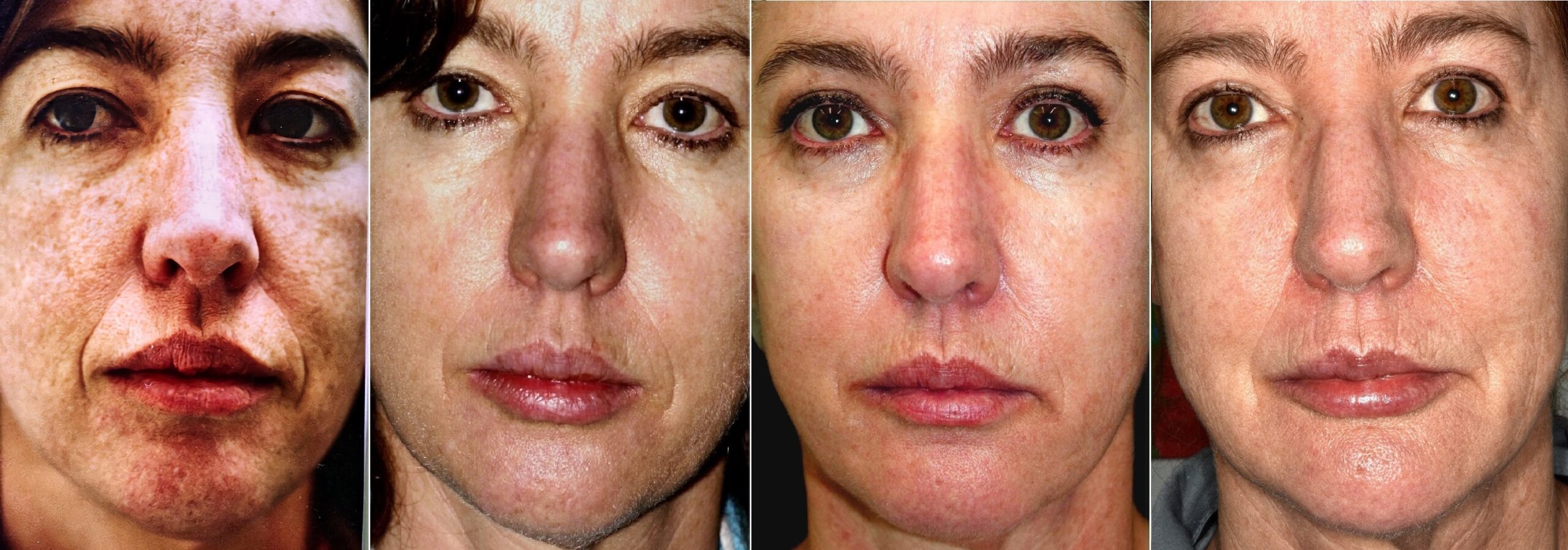
Follow-up intervals over 7 years for 21 years
Evolution of a 21-year treatment in 3 intervals of 7 years. Initially, fractional vaporization of spots; subsequently, maintenance with fractional lasers 3-4 times a year.
I have very aged skin
- I have freckle-like spots and dilated veins.
- The skin surface is rough.
- I have skin tumors.
- I have red, scaly areas that do not fall off.
- The skin has a rhomboidal appearance.
- I have many wrinkles.
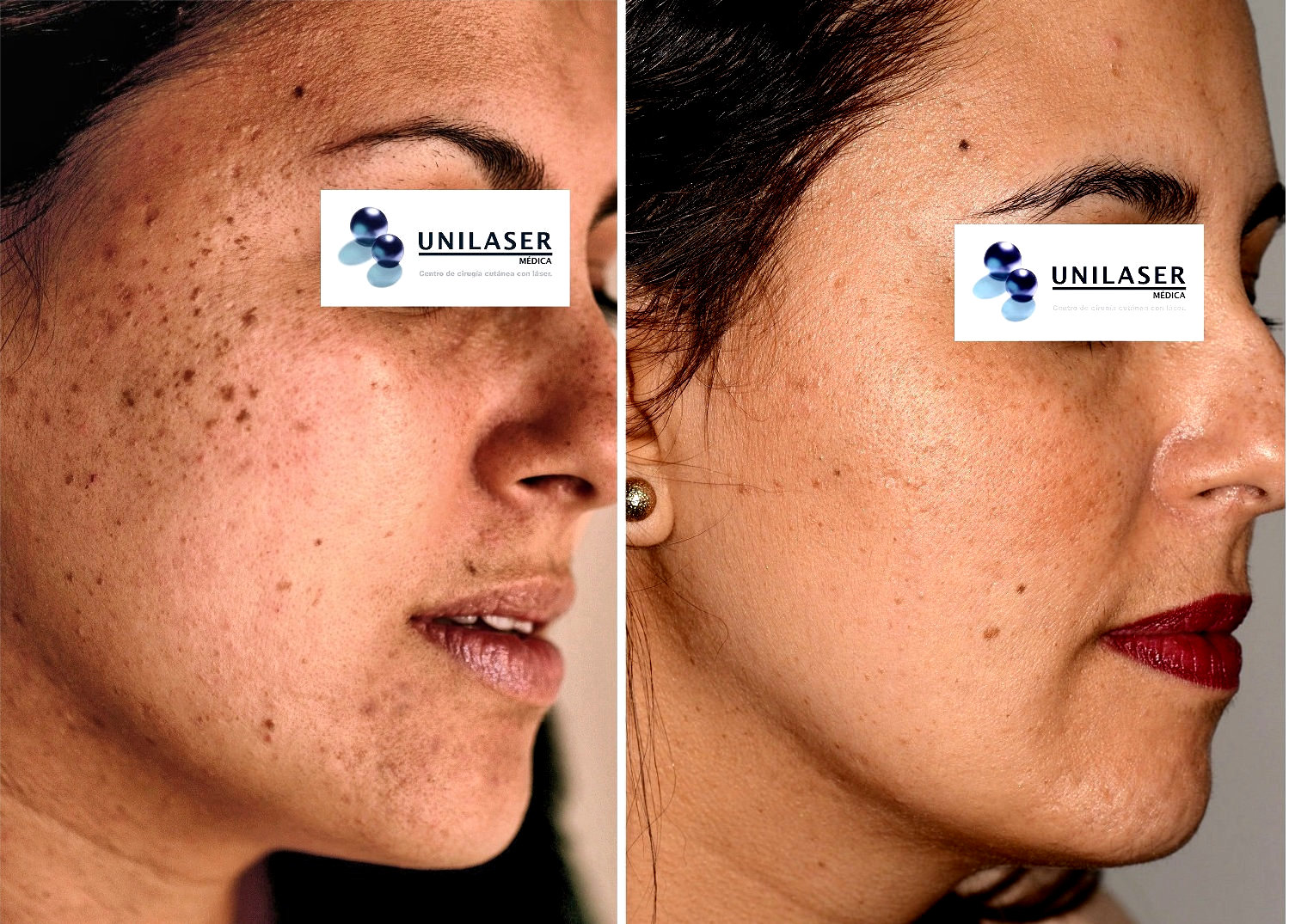
Multiple facial seborrheic keratoses treated with laser.
Aged appearance of a young woman’s skin due to the presence of abundant seborrheic keratoses.
Rejuvenate the face without surgery

Point laser removal of spots and vascular lesions plus maintenance with fractional lasers.
Hyaluronic acid.
toxina botulínica

Methods of Facial Rejuvenation
without surgery
How the results of laser, toxina botulínica, and hyaluronic acid manifest.
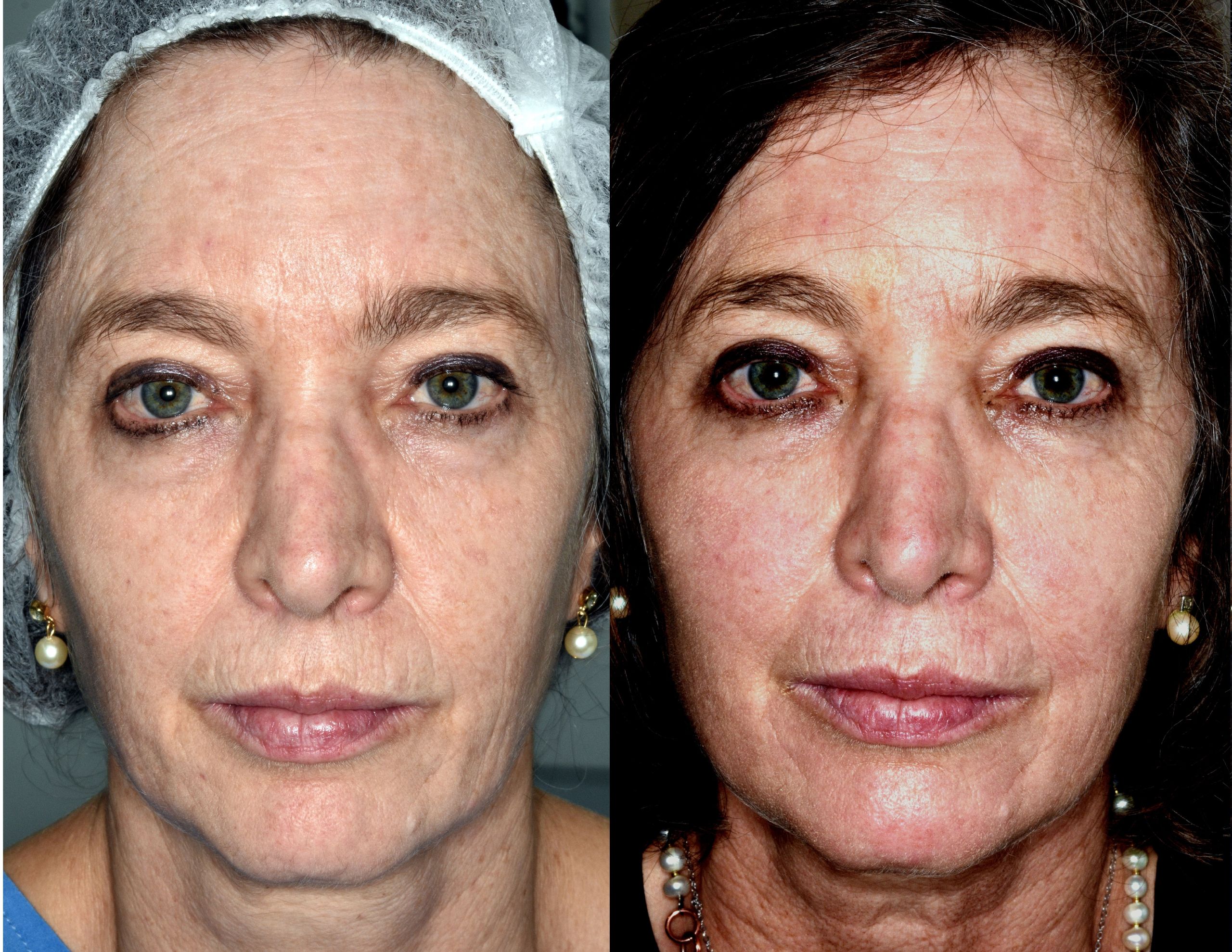
Day 7 after Youlaser session

Facial contouring with hyaluronic acid.
Some Frequently Asked Questions about Laser Rejuvenation:
To ensure the laser effect lasts, we talk about two processes: One is very direct; removing specific lesions is permanent. However, stimulating the skin through renewal with fractional lasers involves many sessions and depends on the relationship between the intensity of each session, the number of accumulated sessions, and the timeframe in which they are performed. Today, they can be done without the need for anesthesia, without risking prolonged redness, and without causing spots, with recovery times of hours or a few days. Therefore, large surfaces can be treated, in addition to the face, chest, and arms.
- Femilift® Alma Fractional CO2 Laser: It is a laser that leaves small scabs in adjustable densities to cause skin smoothing with quick recovery.
- Fraxel Dual® Laser: Fraxel® lasers are fractional lasers that do not leave visible scabs.
- Youlaser® (Quanta): Combines two lasers in the same shot: the CO2 laser and a 1540 nanometer diode laser, very close to the wavelength of Fraxel® (1550 nanometers).
- Milenium 445®: Blue laser to specifically treat spots, venous dilations, and small tumors.
- Ablative lasers: Ablative lasers like CO2 or Erbium-YAG leave micro-scabs.
- Non-ablative lasers: With non-ablative lasers, like the Fraxel® laser, redness and mild swelling occur, similar to a sunburn. They do not generate scabs.
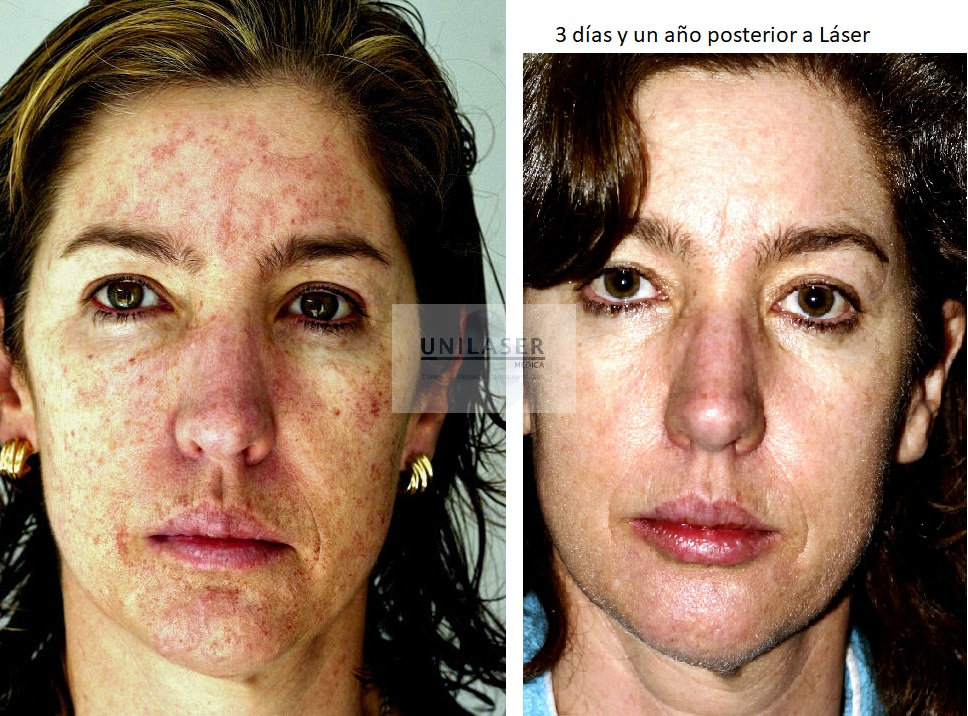
Redness effect on day 3 after manual fractional vaporization with ablative CO2 laser using a point technique. One year later, the treated lesions did not recur.
The recovery time in the manual point technique can take a little longer than 8 days, with some redness persisting in areas where the points are most abundant. The lasers used in this technique are ablative and lead to scabs.
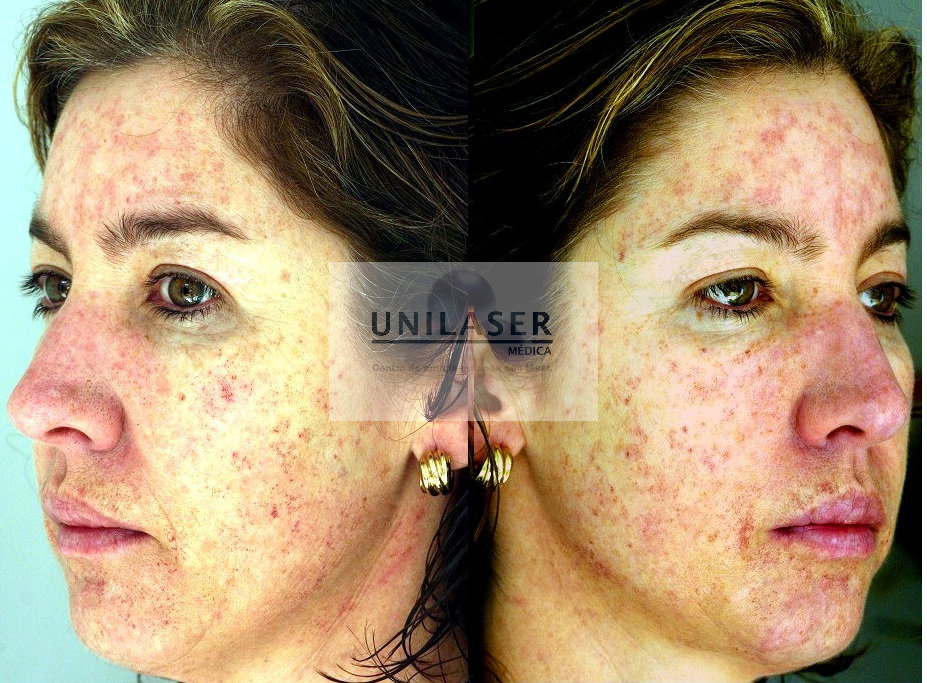
Day 3 after manual point vaporization of persistent lentigines on the face
Day 3 after manual point vaporization of persistent lentigines on the face.
Point or fractional laser sessions can last between 10 minutes and two hours.
Intense Pulsed Light (IPL) is a lamp with intense light that is filtered and used by many doctors and patients until, in some way, the capture of both vessels and lighter spots is not achieved.
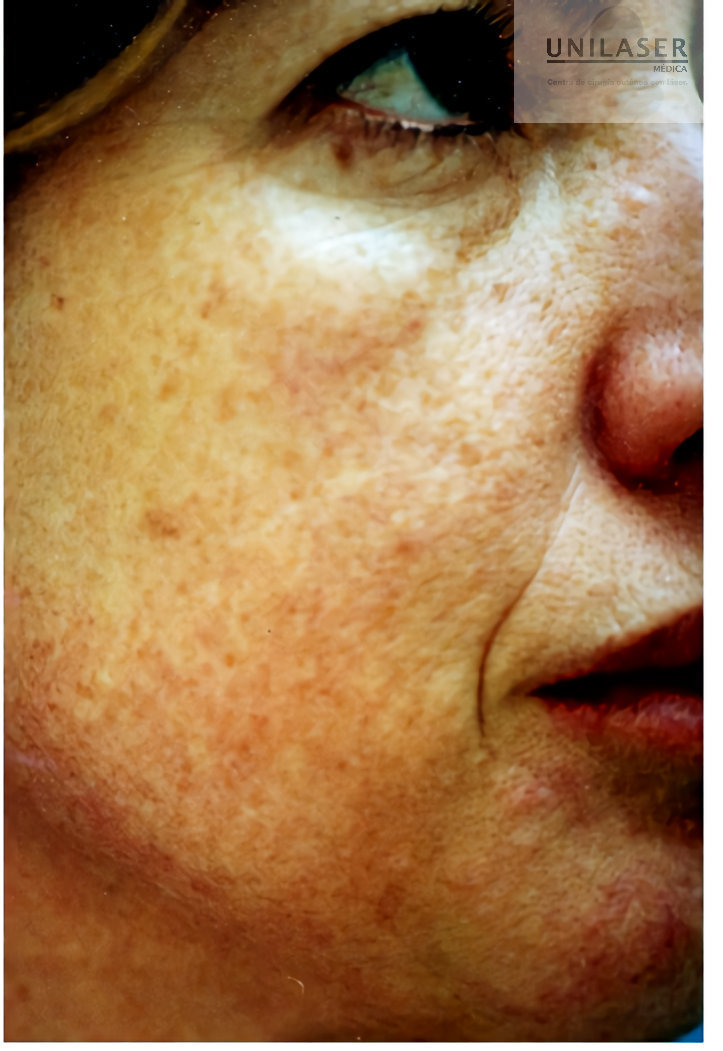
Presence of abundant lentigines that are too light for procedures with IPL or Q-switched lasers. Very dense for quick results with the Fraxel laser. A manual fractional technique with a CO2 laser was chosen with good results.
Presence of abundant lentigines that are too light for procedures with IPL or Q-switched lasers. Also, very dense and deep to indicate the Fraxel laser. A manual fractional technique with a CO2 laser was chosen with good results.
Laser treatment for aging spots (Poikiloderma)
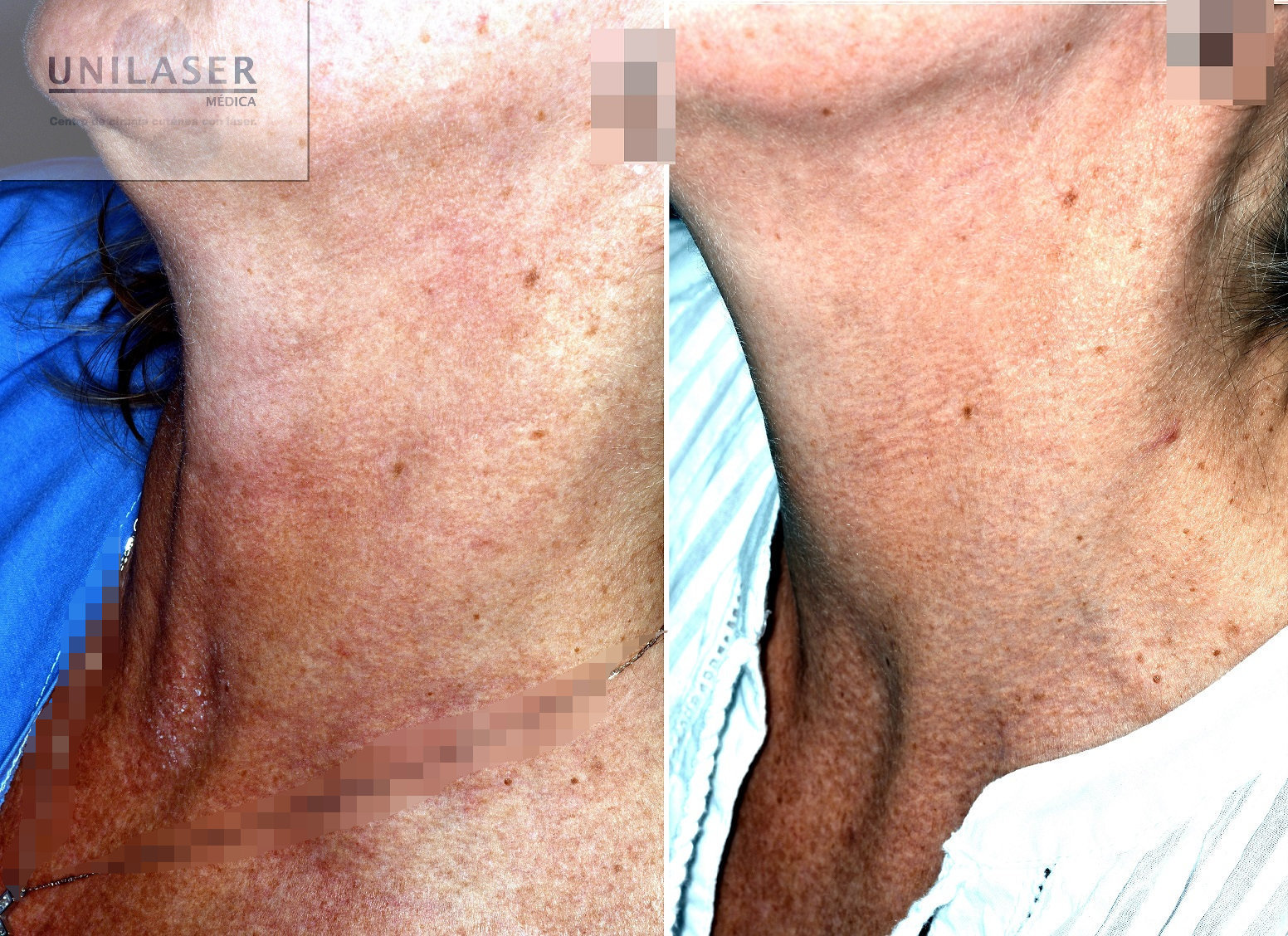
Treatment of poikiloderma of the neck with Fraxel laser plus hyaluronic acid 2 sessions
Milesman 445: It is a vascular laser used for visible vessels that form clusters on the skin. It has an immediate effect and leaves very few scabs after the procedure.
Primelase 1064: Uses light with greater penetration for more dilated vessels that do not respond to lasers similar to the Milesman 445.
Fraxel 1550: Acts in several ways. It can coagulate smaller vessels in a fractional way and, in addition, by promoting skin formation in periods of 4 to 6 months, the new skin will prevent more vessels from continuing to dilate.
Treatment of lip wrinkles
Lip wrinkles manifest the loss of volume of the entire perioral unit. The skin can be treated with laser, but dermabrasion of wrinkles in this area often leads to permanent hypopigmentation that appears once the redness subsides (months). In contrast, fractional lasers do not give precise responses in more advanced cases unless they are used with high densities and powers, leading the patient to risks of scarring and permanent hypopigmentation. The most logical solution is to resort to the manual technique sequentially, observing in some cases the need to stop the treatment when the hypopigmentation begins to be noticeable. Hyaluronic acid in lips

Treatment of Actinic Keratosis

Actinic keratosis is a precancerous skin condition that manifests through small scaly or rough areas on the skin, commonly caused by prolonged sun exposure.
The combined use of laser and progressive 5-Fluorouracil application schemes provides the benefits of tolerance and treatment definition.
Identifying Age Spots and Tumors: Seborrheic Keratoses, Fibromas, Lentigines, Cherry Angiomas, and white spots.
- Seborrheic Keratosis: These are benign growths that often appear in sun-exposed areas such as the face, neck, chest, and back. Their appearance can be light to dark brown, with a rough or warty surface.


2. Fibromas: Also known as soft fibromas or skin tags, these are small skin bumps that tend to appear in areas of friction such as the neck, armpits, and groin. They are completely benign but can be annoying.
3. Lentigines: Commonly known as “age spots” or “sun spots”, they appear in sun-exposed areas of the skin.

4. Cherry Angiomas: Officially known as cherry angiomas, they are small red spots that are the result of the dilation of blood vessels in the skin. They usually appear from the age of 30 and are considered a normal part of aging.

It is interesting to note the coincidence of three very frequent types of skin lesions that increase with the passing of the years: Seborrheic keratosis, cherry angiomas, and soft fibromas.
Almost always, three lines of exuberant tissues will be found together: the epidermal, which are the keratoses; the dermal, which corresponds to the soft fibromas; and the vascular, the cherry angiomas.
White spots (Guttate hypomelanosis, drop-like depigmentation): They resemble the structure of a lentigo without pigment.
Treatment of guttate hypomelanosis

Treatment of a lesion compared to one not treated with laser. In a period of one year, repigmentation was achieved, leaving a small segment with persistence of the lesion.
Vascular skin lesions, which include spider veins, rosacea, cherry angiomas, and venous lakes of the lip, can cause discomfort and affect your confidence in your appearance.
How to remove spots on the face?

Tanned (leathery) skin will be completely altered by sun damage, and the reversal of the process will take years to resolve.

Sequence of the result 8 days and months after laser treatment of a lentigo on the lower eyelid
Often, what is observed is the presence of many dilated vessels and accumulations of pigment in spots that add up; atrophic changes complete the picture.


The frequency of facial rejuvenation treatments
The sequence of sessions at controlled intervals results in the accumulation of the result.


What is the cost of the rejuvenation treatment?
The cost of a laser session ranges between 1 million and 2 million pesos for the face and neck. A combined session including chest, forearms, and back of the hands is 4-6 million pesos.
