 Muscle Relaxants in Aesthetic Medicine
 Muscle Relaxants in Aesthetic Medicine
Normal muscle contraction depends on nerve impulses reaching the muscle fiber through a neurotransmitter called acetylcholine.
Acetylcholine is stored within small vesicles located at the nerve terminal. To release their contents, these vesicles must fuse with the nerve cell membrane through a group of proteins known as the SNARE complex.
Botulinum toxin blocks this process by specifically cleaving SNAP-25, one of the essential proteins of the SNARE complex. As a result, acetylcholine cannot be released, and the muscle no longer receives the signal required for contraction.
After injection, the toxin remains associated with a protective protein complex. One of its chains binds to specific receptors on the nerve terminal, allowing the toxin to enter the cell. Inside the neuron, the light chain acts as an enzyme that cleaves SNAP-25, thereby preventing neurotransmitter release.
To restore normal neuromuscular transmission, the neuron must synthesize new SNAP-25 protein and transport it to the nerve terminal, where acetylcholine release is gradually re-established. This process takes several months, explaining the prolonged clinical effect of the treatment.
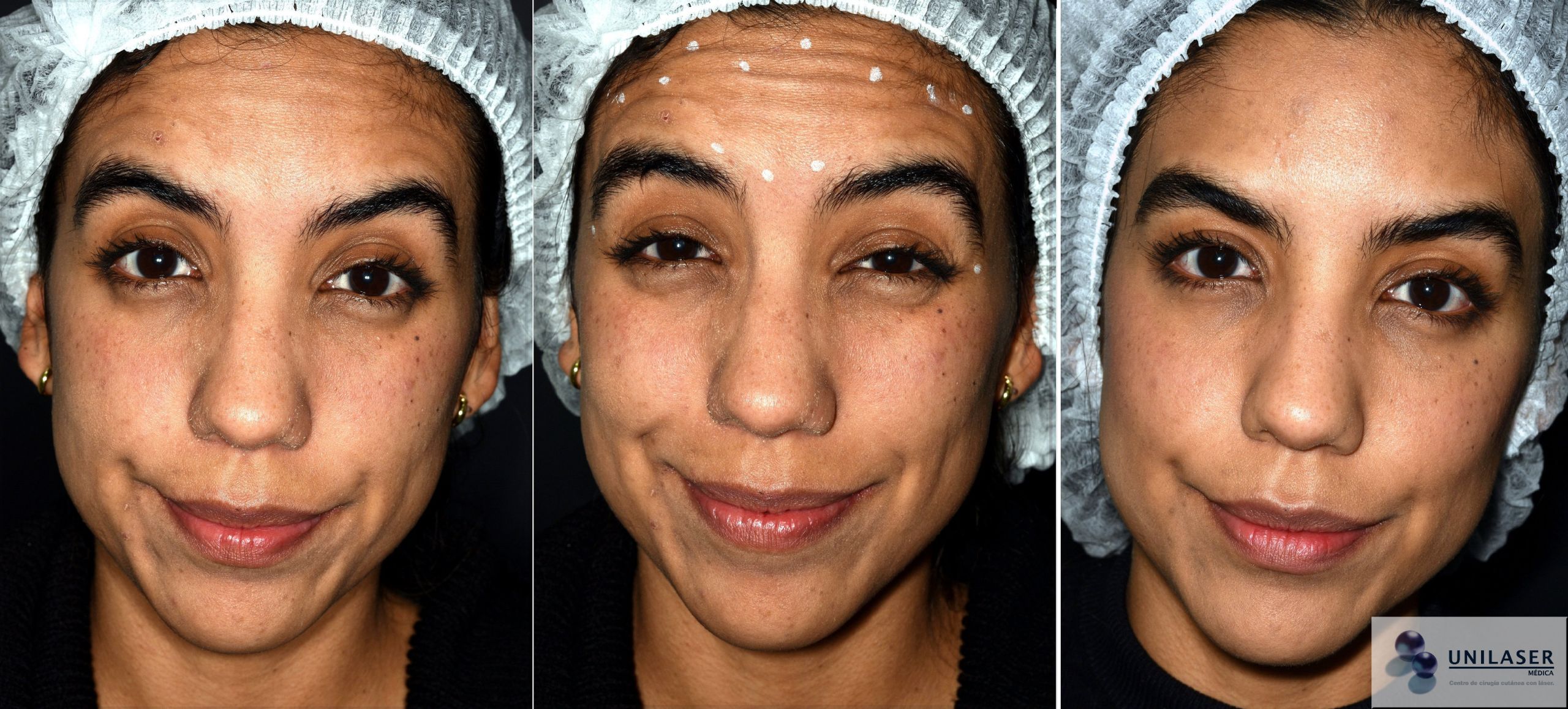
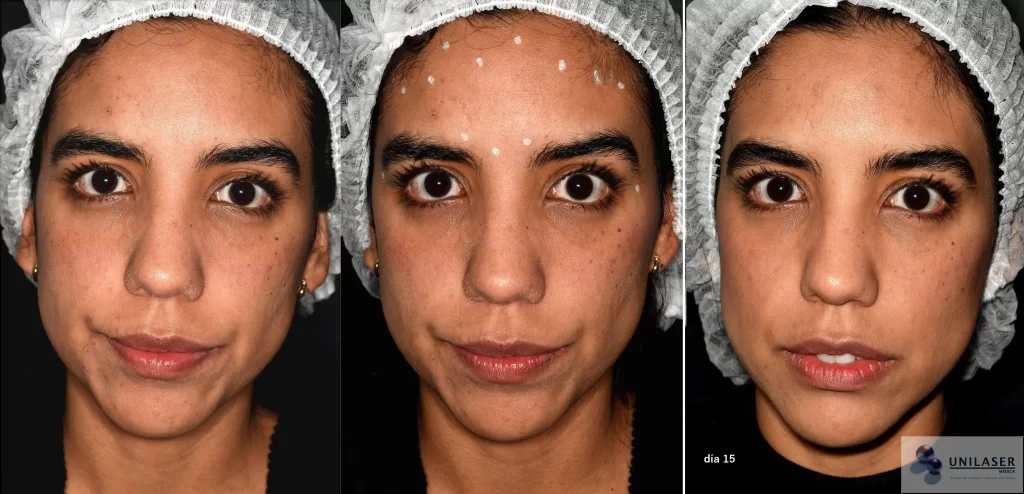
During the first few hours after injection, the toxin progressively binds to the nerve endings. Depending on the dose administered and the muscle treated, the clinical effect begins to appear within a few days and usually reaches its maximum between one and two weeks.
Each injection point acts as a focus of muscle relaxation. During the following days, a form of “competition” develops between these relaxed areas and neighboring regions where the muscle continues to receive nerve impulses. Depending on the dose, toxin distribution, and each patient’s anatomy, relaxation may progressively dominate a larger portion of the muscle, or small islands of persistent contraction may remain, making a touch-up treatment advisable. For this reason, the final outcome should not be assessed during the first few days after treatment.
A patient’s previous experience with botulinum toxin provides valuable information when planning subsequent treatments. A history of an overly severe look, excessive immobility, asymmetry, or a shorter-than-expected duration of effect helps guide adjustments in injection sites, dosing, and, when appropriate, injection technique. Every treatment should therefore be individualized to achieve the most natural result.
There is no single standard dose for the upper third of the face. The total number of units may vary considerably among patients because complete muscle relaxation is not always the therapeutic goal. In many cases, selectively reducing the strength of specific muscles is sufficient to achieve a favorable aesthetic improvement while preserving natural facial expression.
For this reason, treatment is usually planned progressively, beginning with the lowest dose capable of producing the desired effect and increasing it only when clinically indicated. When a longer duration of action is desired, higher doses per injection point are often required.
In our practice, we prefer low reconstitution volumes, typically 1.0 or 0.9 mL per 100-unit vial. This approach allows a greater number of units to be delivered in a very small injection volume, promoting greater precision while seeking to reduce diffusion into adjacent muscles.
The objective of botulinum toxin treatment is not simply to immobilize muscles but to redistribute facial muscular forces. In the upper face, it is primarily used to soften forehead lines, glabellar frown lines, and periocular wrinkles while improving eyebrow position and overall facial expression. Injection technique is essential for achieving a natural-looking result.
Botulinum toxin may also be used to treat gummy smile, soften upper lip wrinkles, subtly elevate the corners of the mouth, reduce chin dimpling, lessen expressions of disdain during speech, and manage bruxism in appropriately selected patients.